Old, Old Records

One of the projects that has been in the works for Fort Pelham Farm is a family history of the residents of the property.  One of the most valuable records is the U.S. Census.  I always hear people complain about having to fill out their census forms but they don’t realize what an amazing record they are leaving behind.  The 1790 census for the town of Rowe shows that Dr. Pardon Haynes was living in Rowe with an adult female and a male under the age of 16.  We can fairly safely assume that the adult female was Hannah, his wife.  We don’t know who the male under 16 was since Dr. Haynes’ first child wasn’t born until 1791.  It could have been a sibling or a hired hand but chances are we will never know.

The record also gives us a clue about the size of the town of Rowe at the time.  There was a total of 202 people enumerated in 1790, not a lot but more than a few.  According to the Massachusetts Historic Commission report published in 1982 the “Rowe population grew by 61.6 percent between 1790 and 1830, peaking in 1820 at 851 persons. Much of this growth, amounting to 46 percent, occurred in the decade 1800-1810”.  The economic base of the town at that time was “predominately agricultural with a small saw and grist mills established along Pelham Brook. A small tannery was established by 1800, followed by a fulling mill in 1808. During the War of 1812, Erastus and Moses Gleason enlarged the mill with the addition of 60 spindles for the manufacture of satinet”.   One of the important textile manufactures of New England in the early industrial period was satinet, a satin-like fabric made largely from cotton.  This shows that there was quite a bit of commerce happening all around Rowe at the time.  The cotton was coming up from the south by horse and wagon since it would be a while before the railroad was built.

Rowe was growing at a rapid pace beginning when Pardon Haynes built the house on Middletown Hill Rd.  We have to believe he spent little time at home because he was riding from patient to patient.  The more the population grew the busier he was.  Meanwhile wife Hannah was at home with their growing brood.  The Vital Records of Rowe show that they had 10 children from 1791 to 1814.

This record is the handwritten vital statistics of Rowe.

With just these two records we begin to get a small glimpse of what may have been happening in the house.   Oral history has it that when Pardon and Hannah Haynes moved onto the land on Middletown Hill in 1790 they were living in what is now the ell.  Dr. Haynes’s number of patients grew along with the members of his family.  By 1800, when the big house was build they already had 4 children.  Pardon Haynes also built an office for himself in one of the front rooms.  The fine details in the woodwork tell us the importance of that particular room.   With the house where it is located it was just down the hill from what was originally the town center where the first meeting house was erected in 1770.  From other records we know that Pardon Haynes was actively involved in town politics, serving as selectman for a couple of years and was actively involved in the church.
Next we will look into what life may have been like in the early 1800’s and what it’s like now trying to restore some of the property.

This Old House When It Was Newer

The woman whose family lived in this house from the time it was built
(about 1790) until 1942 passed away a couple of years ago in New Hampshire.
Two photo albums just made their way to the Historical Society by way
of someone who found them in the trash.
There was a small note in one of the albums to get them back to Rowe.
I’m glad someone took the time to actually look at the books and
helped them find their way home as opposed to some landfill.

These were taken in the late 1800’s.  Apparently they played a
lot of croquet because many of the photographs show the wickets
in the side yard.  Funny, we played croquet there when I was a kid.

These two photographs were taken a little earlier than the one above.
The windows are different on the house.  Would be nice to have those trees in
the front yard again.

This photograph came as more of a shock to us than the rest of them.
It is taken from the back field that Bill has been working so hard at restoring.
I tried to tell him that it was a lot different now than it was when
I was growing up and had the little farm that we had.  It’s amazing what animals
will keep clear – but it never looked like this.  We tried to locate the
spot from which this may have been taken but it’s soo grown up that
you can’t even see the buildings.
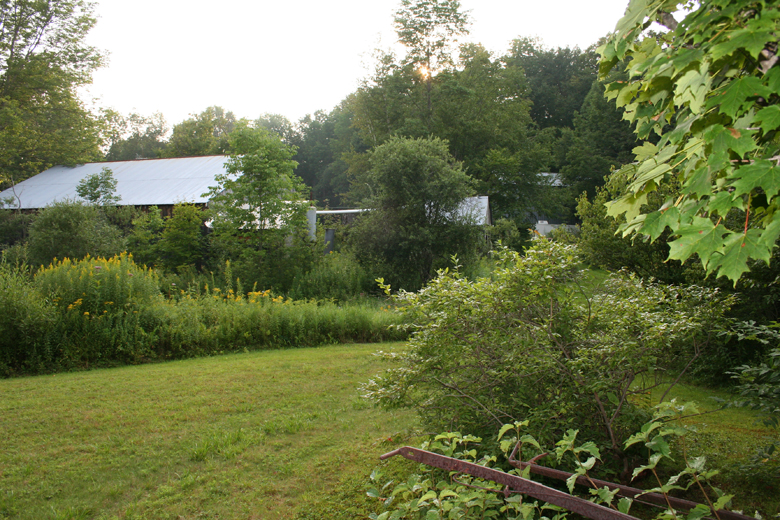
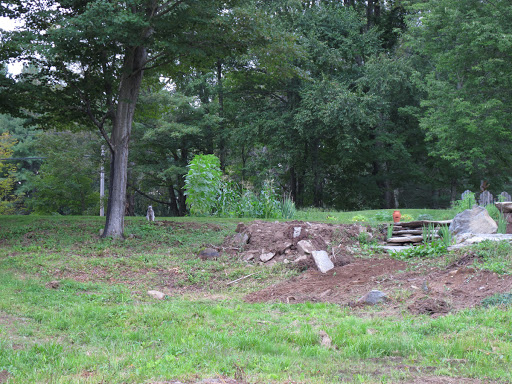
The view above is from the back forty looking up to where the old buildings were.  As you can see, you can’t see.  We have been working on this for a couple of years since this was taken so I will update the photo later in the week.

The Beginning – Dr.Pardon Haynes

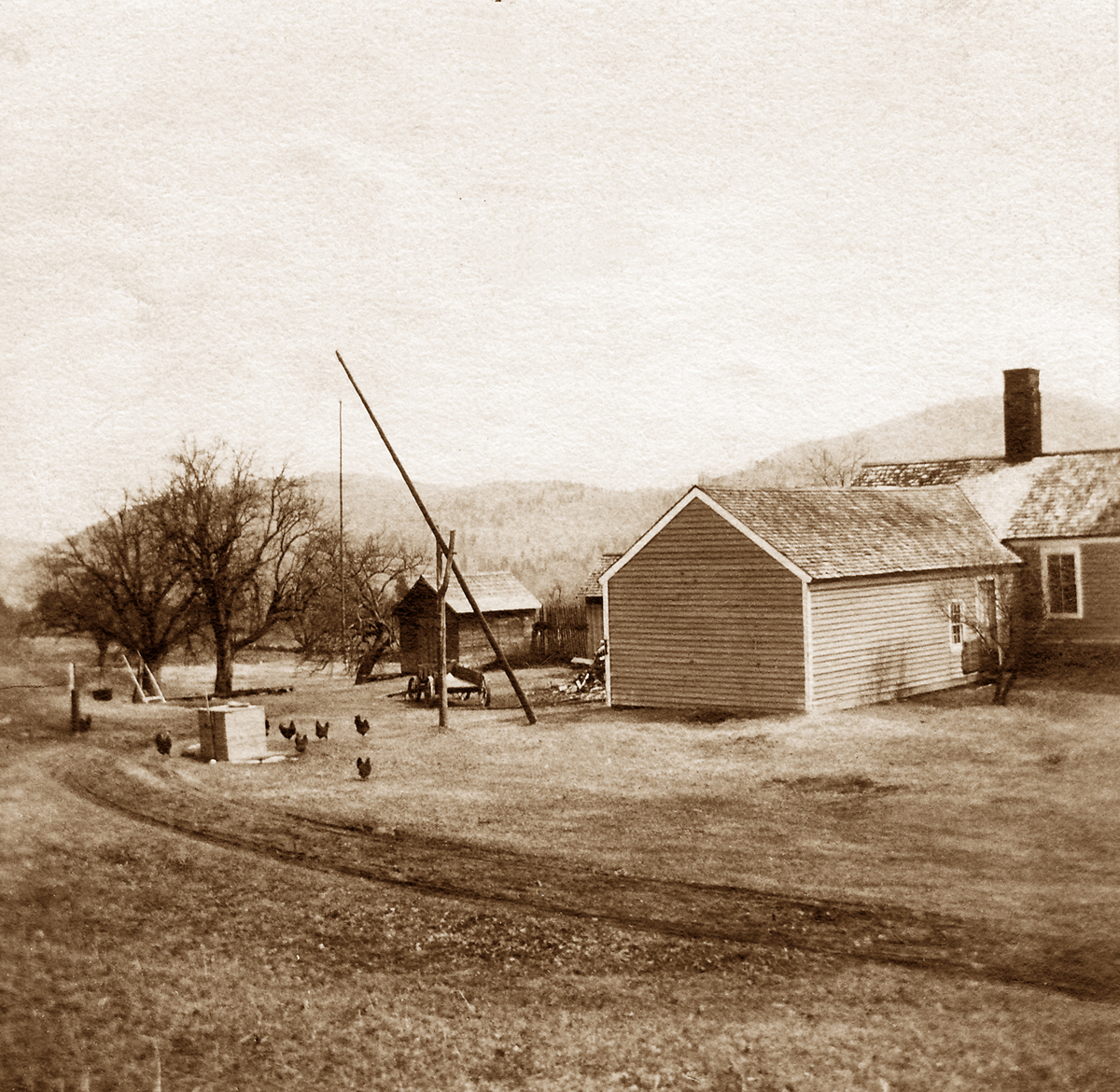
Well Sweep at Fort Pelham Farm Front

Well Sweep at Fort Pelham Farm circa 1880

from The History of the Connecticut Valley in Massachusetts by Louis H. Everts, 1879

     ” Dr. Pardon Haynes.—This gentleman was born in New London, Conn., Feb. 2, 1762. When he was fifteen years old his father removed to Hoosac. During the Revolutionary war he served a short enlistment in the American army.
He studied medicine with an elder brother, and commenced practice in Hebron, Washington Co., N. Y.; but, not feeling satisfied with his situation, he soon removed to the town of Rowe, Franklin Co., Mass. In that town he lived and practiced for a period of forty-five years, building up a most excellent reputation and accumulating a competence: He possessed a robust constitution, and had that quality of determination which invariably wins in the business of life.
The region around Rowe was at the time he settled rough and wild, and his experience was in keeping with the condition of the country. His traveling was mostly on horseback, and his perils and escapes by night and by day were something wonderful to men of the present day. Sometimes, when the snows covered the earth to a great depth, he was compelled to make his visits on the Indian “raquette,” or snow-shoe, and the regular recompense was one New England shilling per mile.
In those days bridges were scarce over the larger streams, and the doctor was often obliged to ford the Deerfield River on horseback at the imminent peril of his life and that of his horse.
He was more particularly distinguished as a practitioner of midwifery, in which department he was probably unexcelled in the region. He was regular in his habits and always punctual to his appointments. He was prominent in other directions as well as in the practice of medicine. Under commissions issued by Governors John Hancock and Samuel Adams he commanded a military company in Rowe when the position was a most honorable one, and won the then proud distinction from Gen. Mattoon of having the best-disciplined company in his regiment. Dr. Haynes died on the 29th of December, 1833, at the age of seventy-one years. He was a member of the Unitarian Church.”  

Other sources will tell you that Dr. Haynes became the physician in Rowe in 1790.  Records show he was also a selectman in 1797 and 1809.  Percy Brown writes in his history of Rowe, “Pardon Haynes, the old doctor, built the Wright house and the Frank Brown house south of it about 1800”.  Both houses were built in the same style with Dr. Haynes home having finer details.

Olive Wright Chamberlain was the last descendant of Pardon Haynes to live at Fort Pelham farm which was sold out of the family in 1941.  In a photo album that was returned to Rowe after her death she describes the lineage and you can tell how proud she was and how much she loved this property.


Relax

3 Adirondacks

This is the spot that we all gravitate to whenever we need a rest from what we’re doing or to contemplate what we’ve done or what we need to be doing. It overlooks the back forty that Bill has worked so hard to reclaim.It is a shady spot most of the day and I swear the few people that drive by must think we spend far more time in those chairs than we actually do.

In April, Gene Logsdon, wrote an article about staying home that pretty much sums up how it is with us.  There is no where else we would rather be.

Here’s a link – http://thecontraryfarmer.wordpress.com/2012/04/25/it-pays-to-stay-home/

One Fine Property

May of 1967 was the year my parents bought the property but my mother

had been making us drive by it every Sunday for years.  She loved this house.

I’m thinking she had no idea what a money pit the place truly was.

The main house was built in 1800 with some speculation that part of

the ell was built in the late 1700’s by Dr. Pardon Haynes.  Dr. Haynes had

become the town physician in 1788.  He married Hannah Holloway in 1790

in Conway, MA. This is the Town of Rowe record of his marriage.

This property stayed in the family for many generations – until 1941.  I’ll be

exploring this family and how it lived at Middletown Hill Rd.

for almost 150 years  as well as some day to day goings on.

Everything in its season.

Even though it has been an odd spring with extraordinary weather I have still 
managed to wait until May to plant some of my garden. 
This past weekend was potatoes.  Katahdins.
I cut them on Friday night and planted on Sunday morning before
the black flies discovered I was out there.  The bed had been ready
for weeks because warm weather always makes me want to dig in the
dirt.  Some little voice was telling me not to plant to early, don’t be deceived
into thinking that Spring had truly arrived just because the temperatures were
feeling like July.  So I waited.
The seeds for tomatoes, peppers, cucumbers and winter squash were
planted weeks ago in their snug little peat pots.  They will go in on Memorial Day
just as they do every year.  It comes a little earlier this year than usual 
so it’s nice that it has been so warm
It took me less than a half an hour to plant 20 pounds of potatoes – 3 rather long rows-
and I wondered as I was doing it why more people don’t plant their own vegetables.
The potatoes you grow taste so much better than what you buy. Sometimes I wonder if it’s 
just knowing that you grew them in your yard that makes them taste better but then again how
often do you get to eat any vegetable mere minutes from being picked?

Catching up on a Major Project

It’s been a hectic few months so I’ll post some
photos of what has occurred in the ongoing project 
that is the house at Fort Pelham Farm.
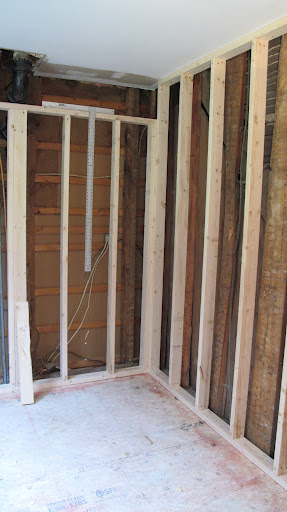
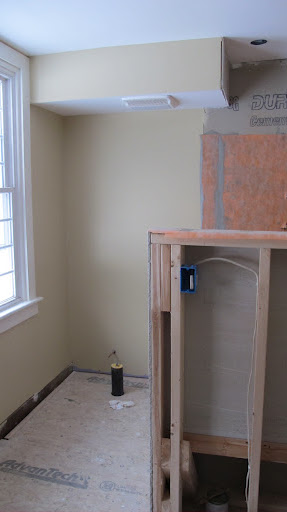
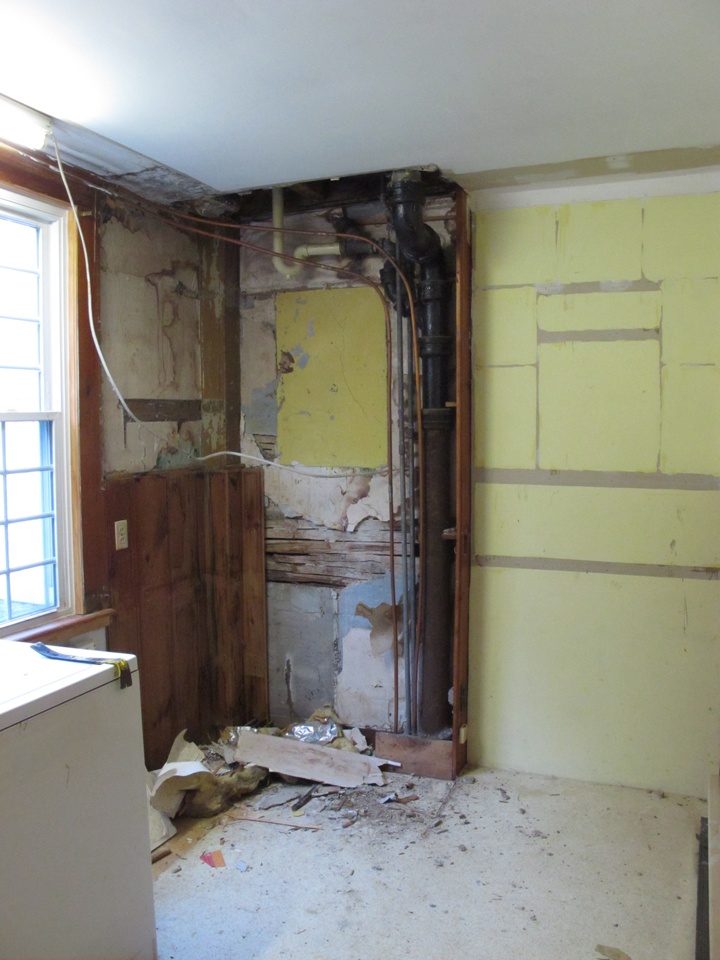
 This is the plumbing wall with everything out of it.
A serious hodgepodge of plumbing materials.
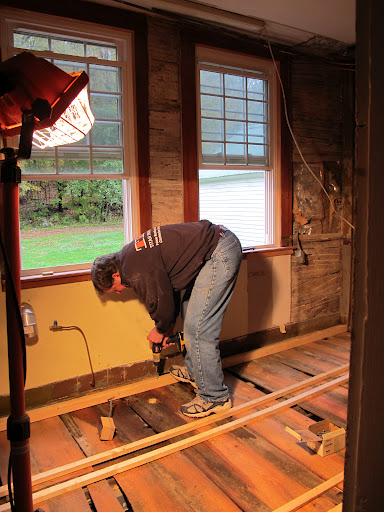
Once the old floor was removed we used a lazer level 
to see what we were dealing with.  One corner was 6 inches
lower than the other.  Russell made giant shims for us to
level the new floor. 
Mike and Bill put in the special MDF for the floor.  It’s tongue and 
groove and gauranteed for 50 years.  Cool.
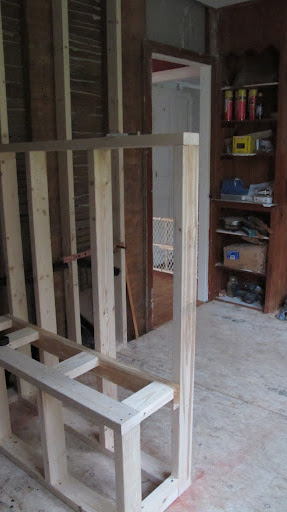
The studs went up and after a lot of 
discussion the half wall was built.
The seat for the shower was built into the 
half wall.
Sweet.
During the week the plumbers came in and
put in new plumbing for the entire upstairs and 
a new hot water holding tank so we would have 
steadier water temps (and not run out of hot water
half way through a shower).
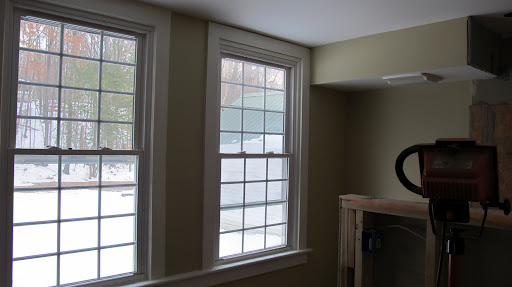
Mike redid the windows, insulated, drywalled and painted
the walls so we could start on the tile.
The schluter membrane goes up.
We’ve used the schluter system for other showers.  It’s simple 
and works very well.
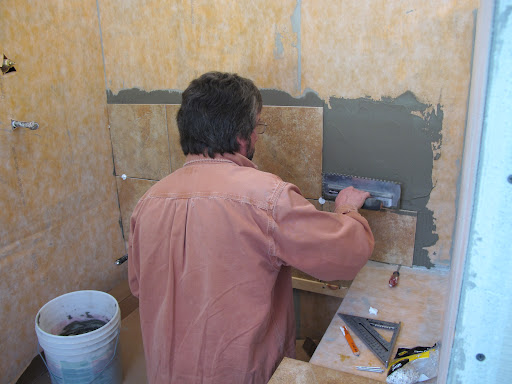
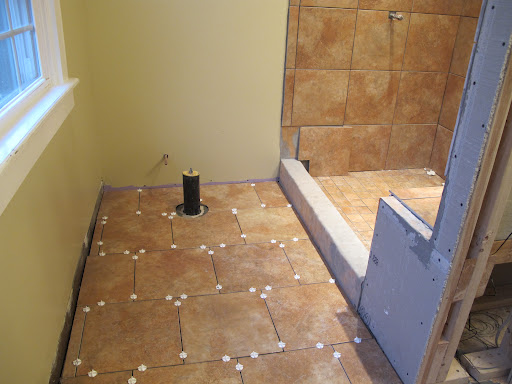
Now the tiling begins.  We started with four courses of 
13″ x 13″ tile.
 These are Italian ceramic tiles.  They are very, very durable.
While Bill was tiling I was designing the sink area.
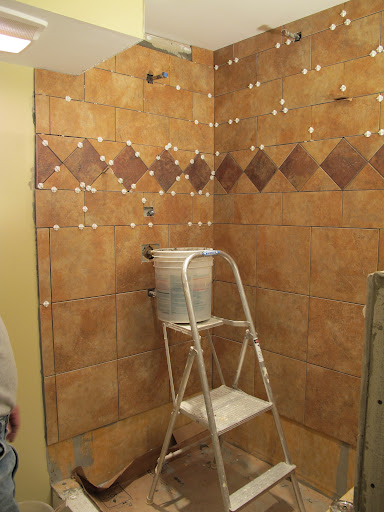
Bill gets to the design courses.  He curses me for
not just using straight tiles.
Lots of cutting and placement is slow.
But look at how beautiful it is.
Mike came over to give Bill words of encouragement.
At this point he needs it – he’s making himself crazy with
his perfectionism.
Done for the weekend.
Next Bill has Paul help him lay out the heat mat for the floor.
That’s right – radiant heat.
Then the tiles were laid on the floor.  Again 13″ x 13″.
Now everything has to set up for a week.

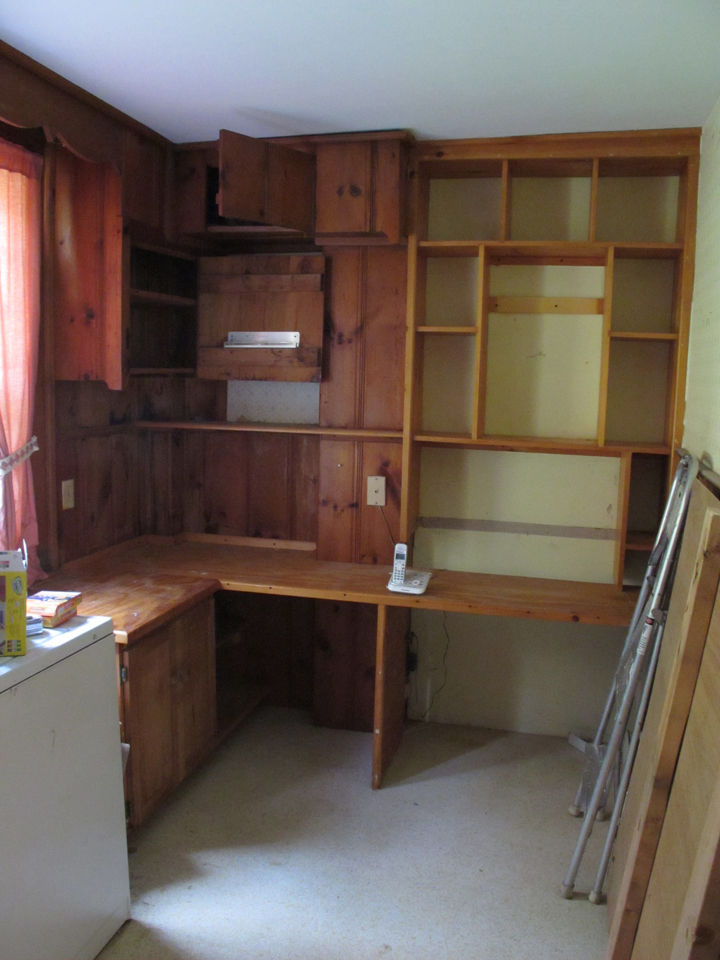
New Project

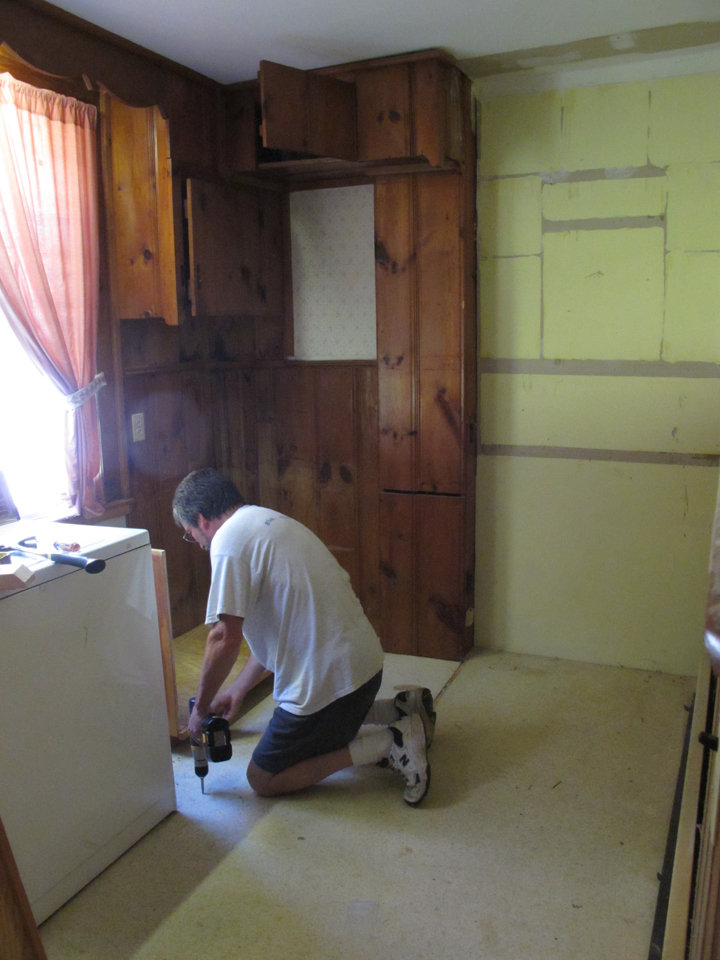
The latest remodel is putting in
a new bathroom downstairs.
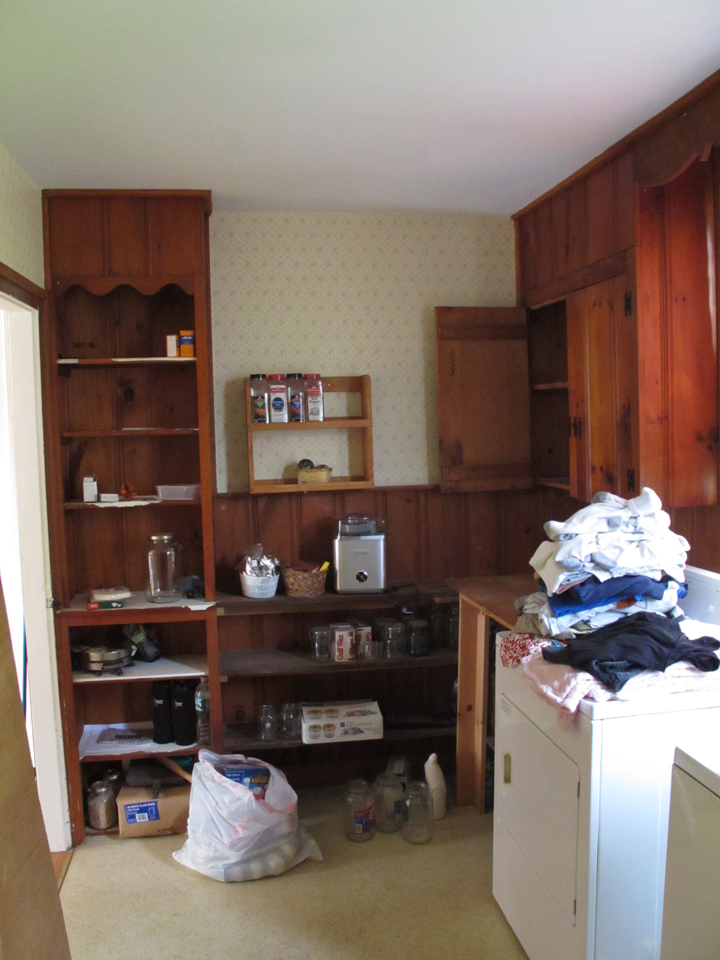
This room was the laundry and
a quilting corner for my mother.
She had the cubbies built in.  The cabinets
above have the upstairs plumbing running
through them.

                                  The other end of the room is the laudry area and also served
                                                                as a pantry of sorts.

                                                   So we’re off on another adventure.
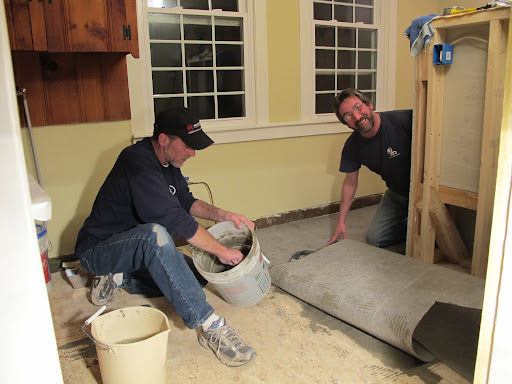
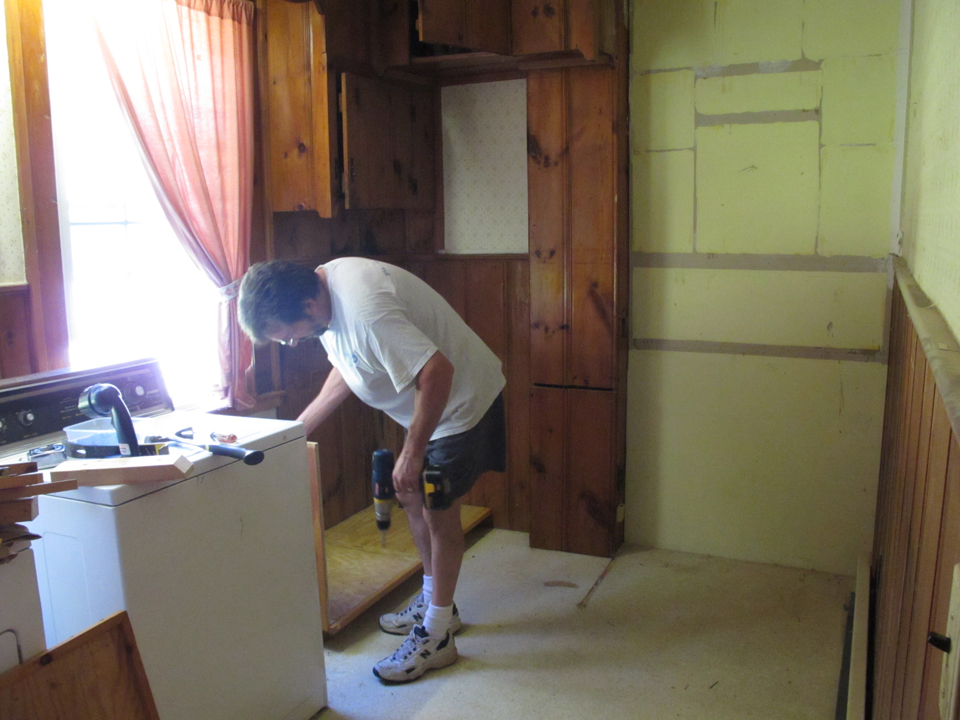
                                            Bill began demo with the idea of salvaging
                                                               what we could.

                                           Some of the panelling will be reused in the room.

The pipes were exposed when we stopped.
Others came in to demo the rest of the room this
week.
We are under the gun to get this finished asap and
we have soooo many friends helping – going above and beyond.

Moving Rocks (Large Ones)

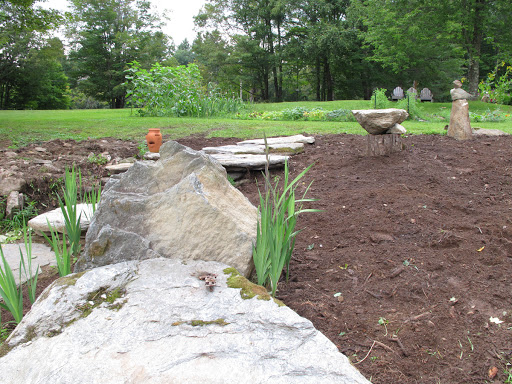
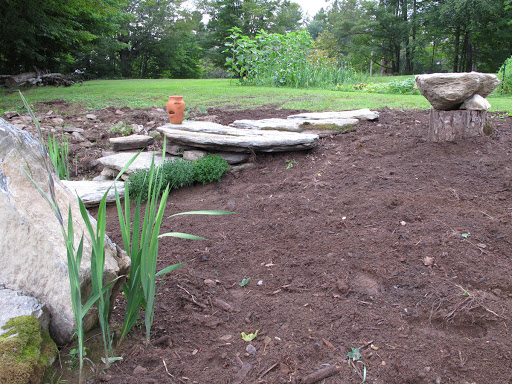
 Bill and I finished the upper part of the new flower garden on Sunday.
The rock mess on the right of the steps is in the process of being
moved.

We put the last huge rocks on the top.  It’s amazing what
you can do with a tractor.

 Bill brought fill in from one of his many huge
mulch piles out in the back.

I raked it into fill in some of the dips.

Also raked out some of the debris – it’s amazing what I had
to remove besides sticks, roots and chunks of rotted
trees.

There was a little metal roofing and the latch to an old ladder.

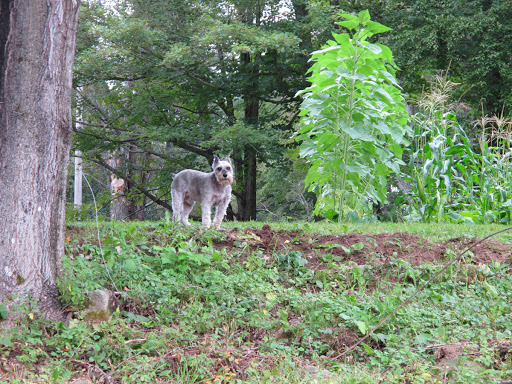
Buddy was just observing when we walked the back forty.
He’s really not sure about the new dog.

But after we begged him to come along he decided Chester
wasn’t all bad.

Next year I think the garden may be that patch below the
new garden.  It’ll have to have stumps and large, round rocks
removed and some fill brought in, but it’s a much sunnier spot.

And Bill and Chester will reclaim their lawn.

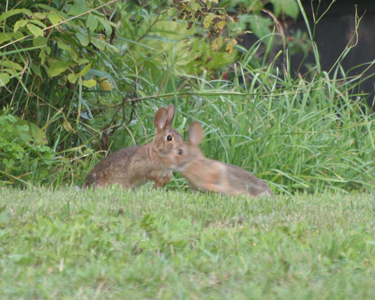
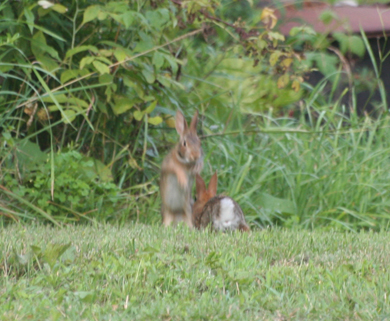
Bunnies

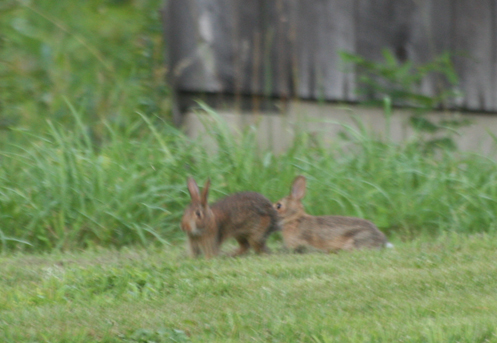
I can’t remember ever seeing rabbits in the yard.  After years of
coyotes every single animal had disappeared.  Good for the
garden, not so much for someone who loves to see wildlife at
every turn.
These photos are a little blurry but you get the idea.
They were playing like kittens.

Attacking each other.

Zooming around the yard.

A few weeks ago Bill found these two in the weeds while
he was weed whacking.  All of them were traumatized by the
whole event.

They are now over it – the rabbits and Bill.  They aren’t
really afraid of any of us.

And there seems to be enough vegetation around to keep
them out of my garden.

So when they aren’t eating they are playing their days
away. Not a bad way to spend the summer.