Family Stories


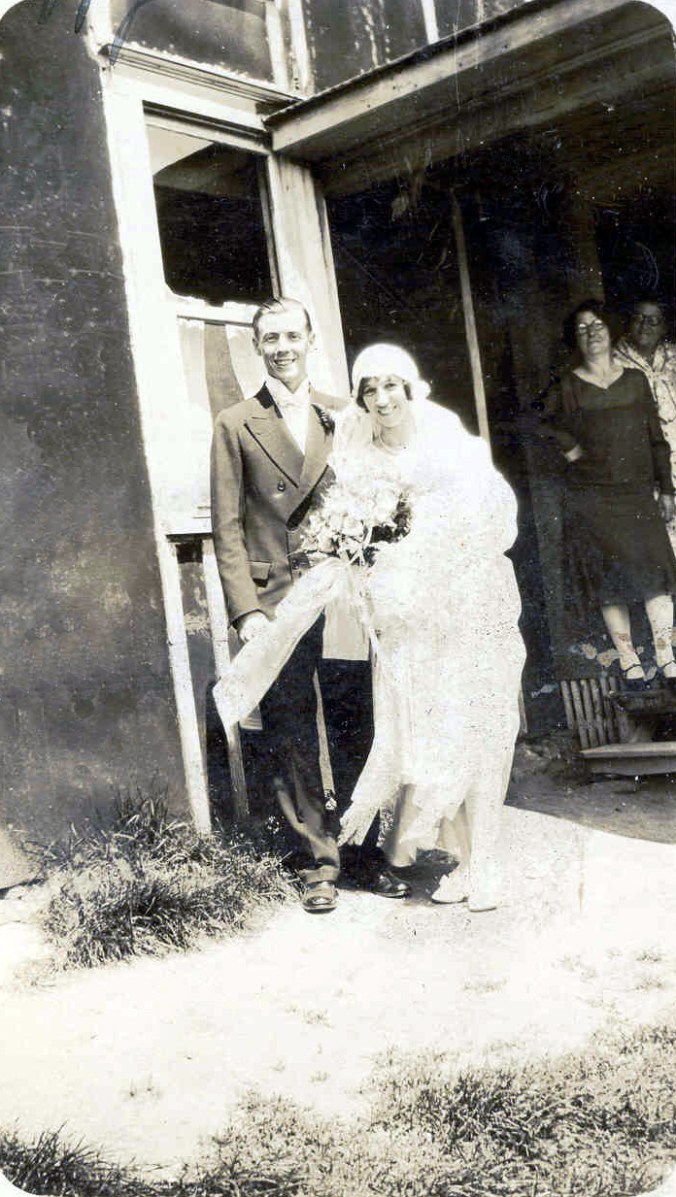
300623 Wedding  Elmer and LenaLena and Elmer Alix – June 29, 1930 – both were working in mills at the time.

Every Wednesday I eat lunch with my Dad at the assisted living facility he lives in now.  It’s always interesting for one reason or another.  This week we talked weaving, which is one of my favorite subjects.  My father is one of the few people left that can tell me the stories of the woolen mills where almost his entire family worked for his childhood, adolescence and young adulthood.

He’s been telling me these stories for my entire life, they are part of my being.  It wasn’t until this past year that I had a much greater understanding of what he was talking about.  He always tells me about the mechanics of the mill, how the looms worked, how the fiber was carded and spun, the kinds of fiber they were using.

When I began my weaving class my goals were twofold – I wanted to learn the process but I also wanted to better understand the stories – my family history.  I knew if I didn’t do this a good part of these stories would be lost.

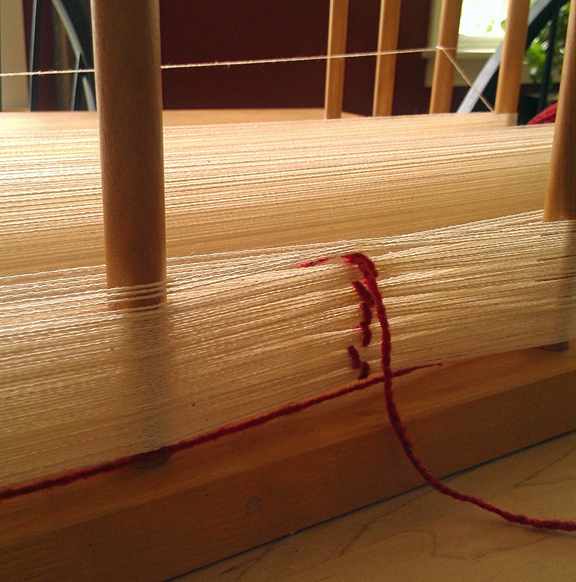
Wednesday Dad talked about winding warps for the looms.  The looms they were using were 72 inches in width (that’s pretty big). Each warp thread came off of its own spool.  He didn’t know how long the warps were but he often has told me about my grandfather knotting the warp threads as they ran out while beaming the warp. He could tie the knots with one hand.  This must have been pretty amazing because Dad never looks more delighted than when he tells me that.

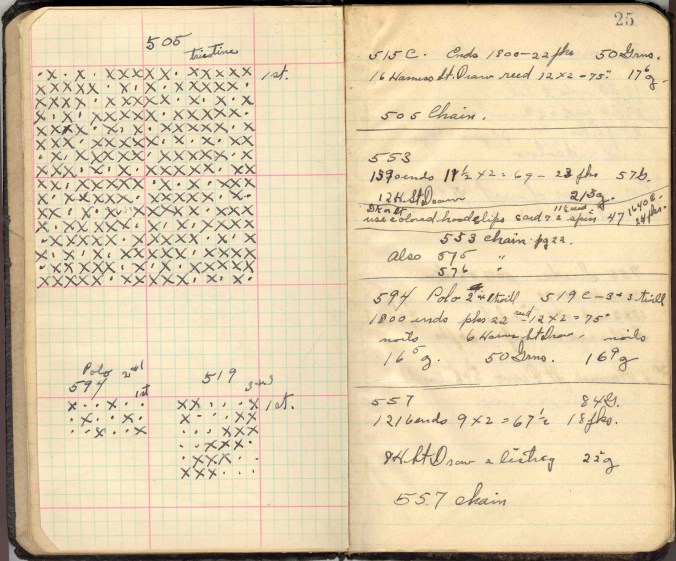
We talked about my grandfather’s weave books. Dad told me this was the book he was using at Charlton Woolen in the early 1930’s.  Today I took it out and realized that the length of the warp was decided by whatever the job was.  This book never ceases to amaze me.  He saw this in his head, he designed on paper and knew what it was going to do – wow.  I understand it but at this point I’m not able to visualized what the warp and weft are going to do without doing a draw down (and I struggle with that at times – it makes my head hurt from thinking too hard).
 

Weave Instructions (2)


The heddles were all threaded by hand – look at this page – 6 harnesses with 1800 ends. It would take me a month. Yikes!  Often there over a dozen harnesses, talk about making your head hurt.

Today I will finish weaving my scarf for the Eastern States Exposition (Big E).  I will take it off of the loom, fringe it, weave in any loose threads, then wash and block.  I think one of the reasons I enjoy weaving so much is it has helped me to understand the kind of thinking my ancestors did while doing what they did for a living.  This has been a great journey.

The Joys of Waiting

With all of the tension in the world right now I thought this was appropriate.

Liz Fountain's avatarElizabeth Fountain, Author

I hate waiting. Most people I know hate waiting. Life is full of waiting: we wait for loved ones to come home, we wait for movies to start, we wait in lines at groceries, banks, or the DMV. We wait to hear the results of tests at school, and the results of tests about our health.  Right now my love is waiting to find out if a new job will come through, unable to make commitments until he does. As writers, we wait for the muse to strike, we wait to hear back about a submission, we wait to see if anyone will discover our work, and we wait to learn if they love it as we do. All this waiting creates an often excruciating sense of anticipation, anxiety, or dread. It puts us in a state of suspended animation, of limbo: we understand, while in this limbo, why Dante…

View original post 443 more words

Farmher

100808 (39)

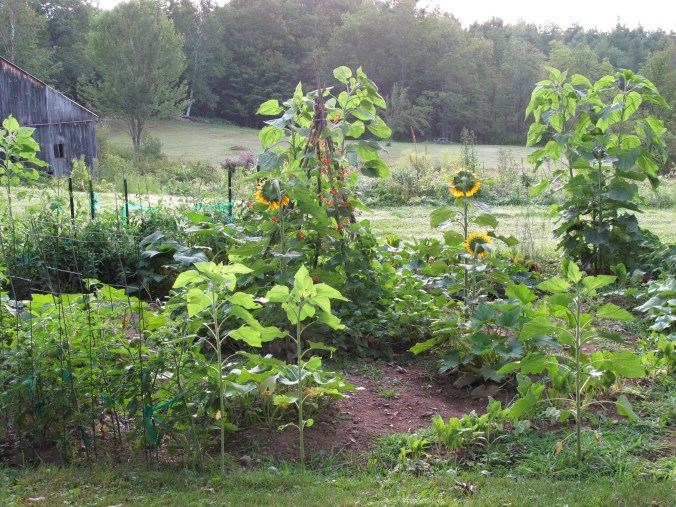
In reading a blog I read daily called Sheepy Hollow Farm I was taken to a site called Farmher.  This is a website documenting women farmers in the U.S. and the photographs are stunning.  It got me to thinking about last weekend.

My sister had a pile of wood in her driveway that needed to be split so last Sunday Bill filled the splitter with gas, hooked it up to the tractor and sent me on my way.  I have to admit I love driving the tractor – especially to other people’s houses.  I love the open feeling as you are driving down the road, the way the tractor sounds.

On the way I passed the home of a classmate of mine (there were only 4 of us total until high school).  He was mowing his lawn and I could see on his face that look of bewilderment – “What is she doing towing a splitter down the road with a tractor?”

When I got to Sue’s we unhooked the splitter leaving it near the pile of wood.  We then proceeded across the field to pick up three large pieces of an apple tree trunk.  They filled the bucket.  After dumping them in the pile of wood we started splitting, each taking a turn at running the splitter or bringing the wood over to be split – both throwing the wood into the pile needing to be stacked.  We were about halfway through the pile when my classmate, his wife and daughter walked by with their dog.  We gave a wave but continued on our quest to finish before we ran out of gas (both us and the splitter).  I said they must be wondering about those crazy sisters doing that kind of work.

That’s what I was thinking as I perused the photography of Farmher.  I saw a woman tilling her garden, out with a chainsaw.  I saw them milking goats, feeding chickens, tending gardens and thought this has been me for a good part of my life in one way or another.  In centuries past the woman did a very large part of the farming along with her husband.  They were a team.  The men did the heavy work, the women made sure they were fed and warm.  They all worked hard.  I come from a line of small farmers, it seems to me that this is the way life really should be.  Bringing forth your sustenance from the land that is yours, tending your field and flock.  Knowing that the work you put in keeps your family happy and whole.

What I’ve Learned

I love Ben Hewitt and these are true words of wisdom.

Ben Hewitt's avatarBen Hewitt

Not so long ago, as part of my reporting on a story I’m working on, I attended a meeting in a community not far from here. At the end of the meeting, each person was asked to say something about what they’d gleaned from the gathering. Or about anything, really. A fellow sitting a few chairs down from me, dressed in classic business attire, said this: “I’ve learned that to be successful in life, it’s helpful surround yourself with successful people.” The crowd nodded its agreement.

The next morning, Melvin was up to breed not one, but two of our girls. It’s mighty convenient when milk cows synchronize their heats, one of those small rural blessings the overwhelming majority of the world will never be aware of (another of those blessings is to have a neighbor who’s attended school for the fine art of artificial insemination). Anyway, two cows in heat…

View original post 420 more words

And Now for Something Completely Different

130824 Warp


Last week my weaving instructor put out an APB to her students that she needed help winding warps for the upcoming session.  Up until now most of the students were at different points in their weaving journey.  Each of us would work on samplers or projects that would teach us something in particular about weave structure and be something we wanted to make.  This session we are doing a round-robin of twills.  I can’t tell you how excited I am about this.

There will be eleven of us participating.  Pam is in the process of beaming the warps on eleven looms, some 4 shafts, some 8.  Each one of us has to go into the studio before the beginning of the fall session and thread and tie off one loom in the pattern that has been set up for that particular loom.  Once the session starts each we will be weaving a different twill pattern on a different loom each week.  By the end we will each have eleven different dish towels.  How fun is that?

I picked up a cone of 8/2 cotton at the studio and brought in home to wind.  I was a few yards short so I just brought my board to Brimfield to finish it.  Pam was beaming the warps when I got there.  She wanted the tension to be the same on all of the looms.  What a project (for her).  I will be going over sometime before the 17th of September to thread and will be waiting anxiously to get started.

Meanwhile I have four weaving days to finish that scarf for the Big E.  I’m almost there but am at a point where I’m wondering what was I thinking?

Can All You Can

8460v

I posted a photo of my canyon of canned goods the other day and some comments surprised me.  I grew up canning.  My mother canned – a lot.  We had a large garden and what she didn’t can she froze.  Everything was done with a hot water bath so there were hours spent in front of that stove or in a hot kitchen, it takes a long time to process things with a hot water bath.  She used the WWII volume of the Ball Blue Book.  I still have it but these days almost everything I do is with a pressure canner.  It saves me time, water, energy and sweat.  I am also able to can pretty much anything safely.

This time of year the concentration is on fruit with tomatoes included.  Last week I canned tomatoes, peaches and made apricot butter as well as a few jars of dill pickles.  This week will be a repeat.  I really need about 50 pints of tomatoes to last me until next summer, I’d prefer to have more but tomatoes aren’t as easy to come by this summer due to a blight that seems to have effected everyone everywhere.

The peaches are beautiful this year and I had a really great canning experience this past weekend.  I love it when everything goes smoothly.  I don’t want to fight to peel those peaches.  I read somewhere to make sure the water was at a rolling boil and to dunk only a few peaches at a time for 30 seconds then into the ice bath.  Worked like a charm.  I also made sure my fruit was at room temperature before I started.  Canning fruit at home also allows you to control the amount of sugar that is used in processing.  That’s important to me, I don’t like things really sweet, I want to taste the fruit.

Our pear tree is loaded with fruit this year – I fear for its branches.  The apple trees are the same.  I will probably make a few pints of pie filling from the apples just to see if I can make it work to my satisfaction.  The pears won’t even ripen until after Thanksgiving and I will can those in chunks like I did the peaches.

There is nothing like the taste of home canned food, especially in winter.  I know exactly what is in every jar, there are no preservatives, no additives, no GMO’s.  It’s real food.  There is also the feeling of food security which is certainly what food preservation is all about.  Having enough to eat until the next harvest comes in.  Plant enough to eat now and put by enough to get you to next summer.  We live in a world where everything is immediate.  It takes very little time to empty out a grocery store, they are restocked every day.  I don’t ever want to worry about where my next meal is coming from or not having food to feed my family.  I’m sure that comes from growing up when food security may have been a concern.  I just remember this time of year the shelves were stocked and you had choices.

130824 Canning CanyonI know when I look at this my mind is set a little more at ease.  I have good food, I took the time to make it right and now all that is left is the eating.

Tomato Thief

130825 Buddy (2)


I have a few combination pots of herbs that have (had) cherry tomato plants in them.  I have had tomato blight this year in a big way so the tomatoes are on some very sad looking vines.

Years ago, when I had only one dog, it was a little schnauzer named Holly.  She was completely food obsessed. Each year I planted a pot of cherry tomatoes in my back yard in Enfield so I would pick one for her every time we went out.  She loved it and her first stop in the yard was that pot.  Buddy came along and she showed him the trick.  Years have gone by and I no longer have tomatoes in Enfield.

Buddy is getting on in years and we think he has a little dementia (which dogs actually do get).  This is what we saw him doing Sunday night.  He was picking the tomatoes off of the vines in the pots in the yard.  He’s hard of hearing so was unaware of me being behind him with the camera, he was totally concentrating on eating tomatoes.

130825 Buddy (1)We all had a little chuckle about this finding it interesting that so many years have passed since he actually did this.

The day was beautiful and we cooked and ate outdoors.  As we were sitting down to eat Bill looked over to the garden where Buddy was showing Chester the ropes in tomato eating in my tomato patch.  One yell and Chester made a beeline out of the place he knows he’s not supposed to be.  Buddy?  He had to have at least one more before he left.


Garden Economics

130824 Garlic

This is my garlic harvest for this year.  A year ago about this time I was thinking I really needed to grow some of my own but when I went onto the High Mowing Seed website with the intention of ordering some and they were sold out.  Bummer I thought – then figured I’d order it for this year. Garlic is planted in the fall, like tulips and daffodils, it needs that fall and winter time to set out its roots.  It then blossoms in June or so and is ready to harvest in July (at least here it is).  The seed companies send out their garlic for planting the first week in October.

I moved on completely forgetting about the garlic. A couple of weeks later I received a package in the mail – a pound of garlic for planting from High Mowing.  I had forgotten that I had ordered it with my spring seeds back in February.  It felt like pennies from heaven because I’d paid for it back in February as well.

The garlic I had ordered is called Music.  It’s a hardneck variety which I know seems to do pretty well around here. I dug a nice bed for them in a sunny, well-drained sight and placed each clove about 3 to 4 inches deep, covered it and walked away.  When spring arrived it was the first plant out of the ground.  In June the blossoms, called scapes, emerge.  I pick all of them off – doing this puts the plants energy in forming bulbs.  The scapes are delicious – I chop them and cook them in eggs for breakfast but they are great in all kinds of things.  Two harvests from one plant.

Towards the middle of July the stalks of the garlic begin to turn brown from the ground up.  I’ve heard that timing is everything with garlic.  You don’t want to dig it up too soon- you want those bulbs as big as you can get them.  If you wait too long the bulb will no longer be tight, the cloves will have splayed out – ready to continue growing for another year.  I had to guess.  I waited until the plants were brown half of the way up the stalk and then I dug one out to see.  It was a thing of beauty.  I dug the rest.

Curing the garlic takes another 3 to 4 weeks. The skins dry to that thin paper we are all familiar with.  I just laid the whole plant on paper in the house and waited (of course a couple of bulbs were sampled along the way).  This weekend I cleaned and trimmed the crop. What you see in the photo is what I grew.  This was a pound of garlic cloves.  The cloves are very large on this garlic so it doesn’t take many to get to a pound.  For every clove you plant you get a bulb.

This garlic is so good I vowed to plant 3 times as much next year – the problem?  It would probably cost over $60 for the seed.

Bill and I gazed at these beautiful bulbs and decided that I would use most of what I grew this year as seed for next year.  It made me a little sad to think about not eating most of what was in the basket but I could quadruple the number of bulbs next year just by planting what was in front of me.  It was sort of a no brainer, but all I want to do right now is eat garlic mashed potatoes from the garden.

Dusk on Pelham Lake

130818 Percys Point


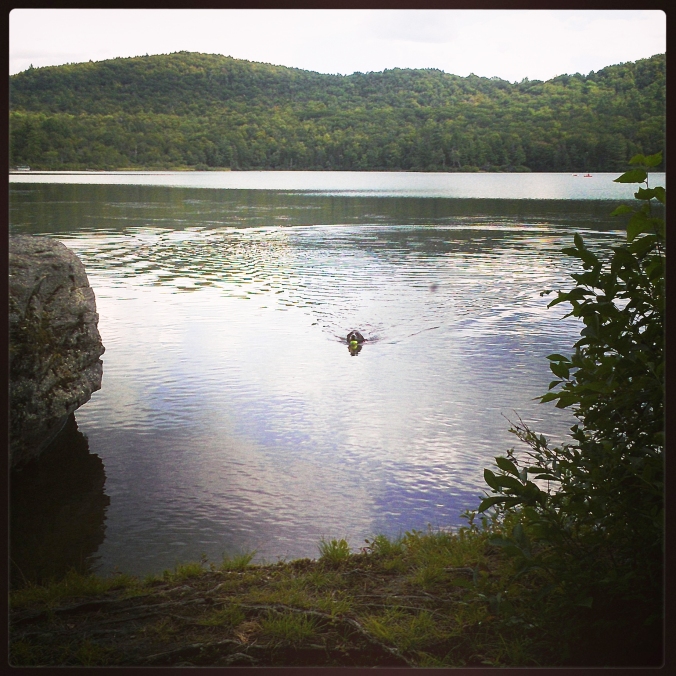
Percy’s Point on Pelham Lake has become one of my favorite places to bring Chester.  The lake is such a calm, quiet place.  This particular spot boasts a few picnic tables and a couple of benches.  I was leaning against one of the tables the other day and realized my father had made all of them a few years ago.

We started visiting this spot out of necessity.  Chester likes to be in water when he gets hot but the only water on our property now is a slimy, muddy little brook that is trickling water from the beaver pond above it.  There is no other word to describe it other than gross – and stinky.  When he’s hot he will go into the reeds around it and lies down so he comes out covered with this rust colored goo, yuck.  We’ve tried hosing him off but it’s pretty ineffective and he won’t get into the pool we have for the dogs.  Usually I hose most of the mud off and then bring him to the lake and make him swim for a while until he’s clean.  He thinks this is quite a treat and we are now wondering if he goes into that muck just so I’ll take him to the lake.  Hmmmmm.

There are times that are particularly nice to bring him there.  Last night I was canning and didn’t get to go until almost dusk.  On the way a coyote crossed the road in front of my car.  They elicit fear in many and if there is a pack of them near your yard at night I can understand that – they are loud and talkative.  I’m thinking they are probably the reason I haven’t seen a rabbit since winter as well as every other critter that usually makes its home around the property.  I have to tell you though, they are a magnificently beautiful animal.  They have the most intense yellow eyes, they stare right through you.

As I was tossing the ball into the pond a couple walked by with their little dog on a leash.  I told them about seeing a coyote not too far from there.  Anyone here that has small animals knows that letting them loose this time of day always runs the risk of losing them.  As beautiful as they are being aware is always the best idea.  Meanwhile Chester kept swimming after his ball paying no attention to the couple or their little dog.  There’s is nothing that keeps him from his game.